
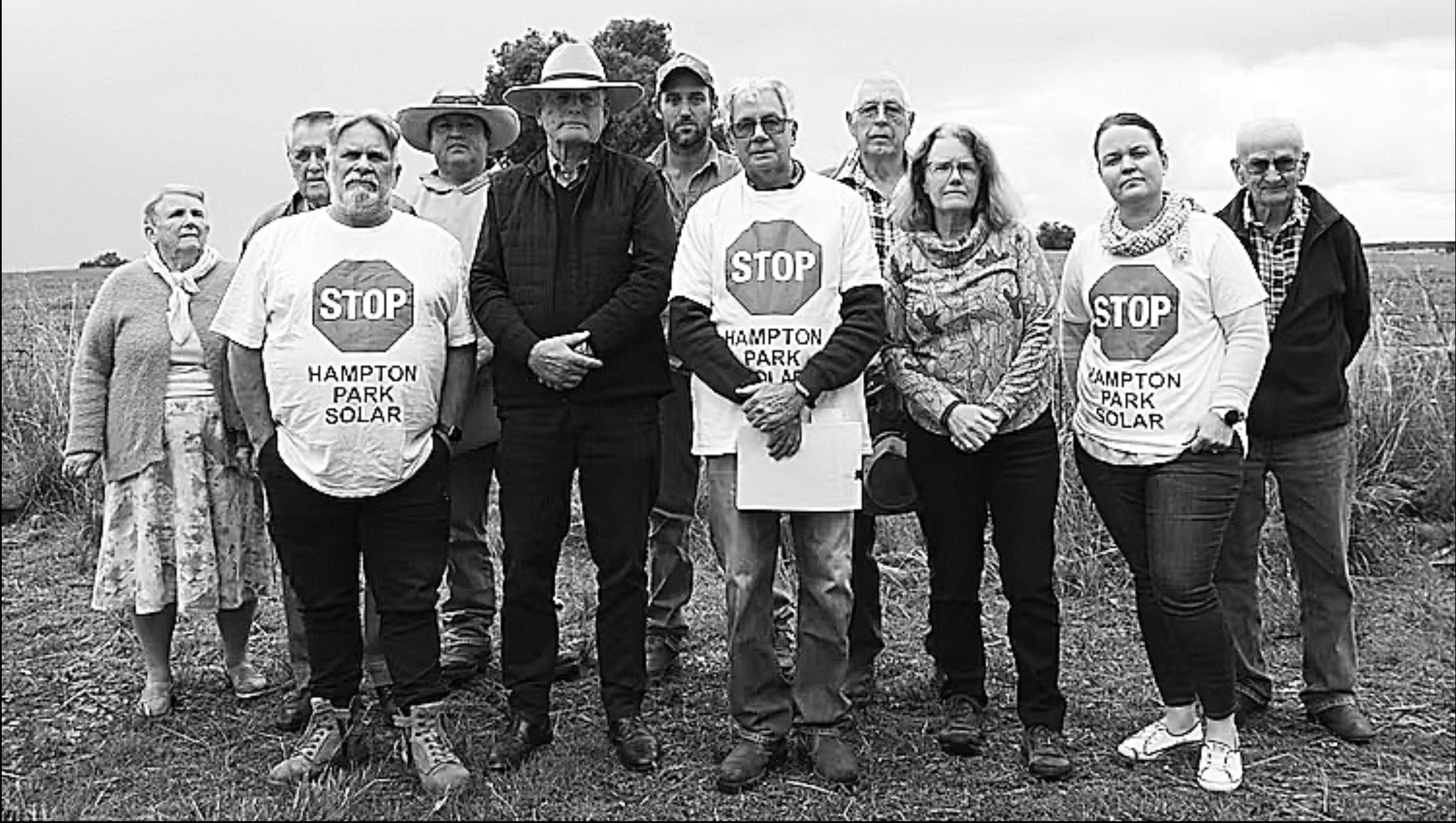
RURAL RESIDENTS between Wongarbon and Dubbo say a renewable energy proposal has driven a wedge through their tight-knit community, as developers roll out more mental health support for affected landholders. The Hampton Park solar development, a part of Australia’s first declared renewable energy zone (REZ), has triggered an emotional response from affected landholders. “This development is driving a nail in our community out here,” Michael Edwards, who has lived in the area for 35 years, said. “The construction out here is going to turn our lives upside down.”
The community’s campaign against the project comes amid the release of an interim report from a parliamentary inquiry into the impacts of REZs on communities and industries in NSW. The report found there has been “inadequate consultation between the NSW government, renewable energy developers and the Central-West Orana community.” It said that among the impacts of this were the mental health of community members and the “eroding of social cohesion.”
The Director of the Institute for Infrastructure in Society at the Crawford School of Public Policy, Australian National University professor Sara Bice explained why the rollout of renewables projects had caused backlash in some communities. “For many rural Australians, the energy transition will require major, likely irreversible, changes of scale and nature that could alter their local communities, land, livelihoods, or identities,” Dr Bice said. “Far fewer urban residents will be asked to make such trade-offs or sacrifices for the common good. Communities live in places, not projects.”
The report recommended the state government “urgently conduct an independent cumulative impact study” on the Central-West Orana REZ and that EnergyCo provide mental health support to affected landowners.
Sleepless nights
Fourth-generation farmer Angus Kelly, whose property adjoins to the project, said the mental health impact was often underestimated. “There’s been a lot of sleepless nights, rolling over all the what-ifs,” he said. “My dad is in his 80s. Other projects have affected him over time, but nothing to this extent.”
In a statement, the developer of the Hampton Park project, Australian Renewable Energy Services (ARES), said it recognised the 360-hectare solar project and 180-megawatt battery project meant a great deal of change for the local community, and it was offering support. “As part of our engagement program, best practice and listening to feedback from neighbours who say they are experiencing stress, we offer confidential wellbeing support,” an ARES spokesperson said. The solar and battery proposal was open for community feedback until July 25 to inform a scoping report that is being reviewed by the Department of Planning, Housing and Infrastructure.
Locals opposed to the Hampton Park project have formed a group, Stop Hampton Park, which now has about 40 members and more than 1000 followers on Facebook. They said they were determined to halt the development and protect their community’s wellbeing. Stop Hampton Park member Peter Dwyer said he was aware ARES was offering wellbeing support to residents near the proposal, but that did not make the process less daunting. “People in the areas around these projects feel totally powerless,” he said. “That has a major impact.”
Many residents feared the proposal could negatively impact their property values, others had concerns about their safety in the event of a fire. Dr Bice said opposition to specific projects did not mean communities were against renewable energy entirely. “They are often opposing how the transition is being implemented and rightly asking what trade-offs they are really being required to make and what the benefits for themselves, their families and neighbours will be.”
Developers expand mental health support
In response to growing concern, the NSW government’s EnergyCo has partnered with Grand Pacific Health to deliver mental health services to landholders living within 500 metres of proposed infrastructure. EnergyCo is the delivery lead for renewable energy zones in NSW but is not the developer of Hampton Park. GPH decides how many staff, including psychologists, social workers, mental health occupational therapists and Aboriginal health workers, are required to deliver the program.
The program complements existing support for landholders affected by property acquisition that has been in place since 2016. The support includes 24/7 helplines, one-on-one counselling and reimbursement for private clinicians.
Locals rally together
Meanwhile, other states are watching closely. Delivery bodies in Queensland and Victoria are considering similar mental health support programs as renewable energy zones expand nationwide. In Queensland, where there are no declared REZs yet, delivery body Powerlink said it offered support to all landholders impacted by its project through free telehealth sessions from the counselling service Rural Health Connect. And in Victoria, REZ-coordinator VicGrid said they were exploring partnerships to “provide mental health support for communities and landholders in proposed renewable energy zones in Victoria.”
The Stop Hampton Park group is preparing submissions, attending community consultations and council meetings, and calling for greater transparency and engagement from government and developers.