
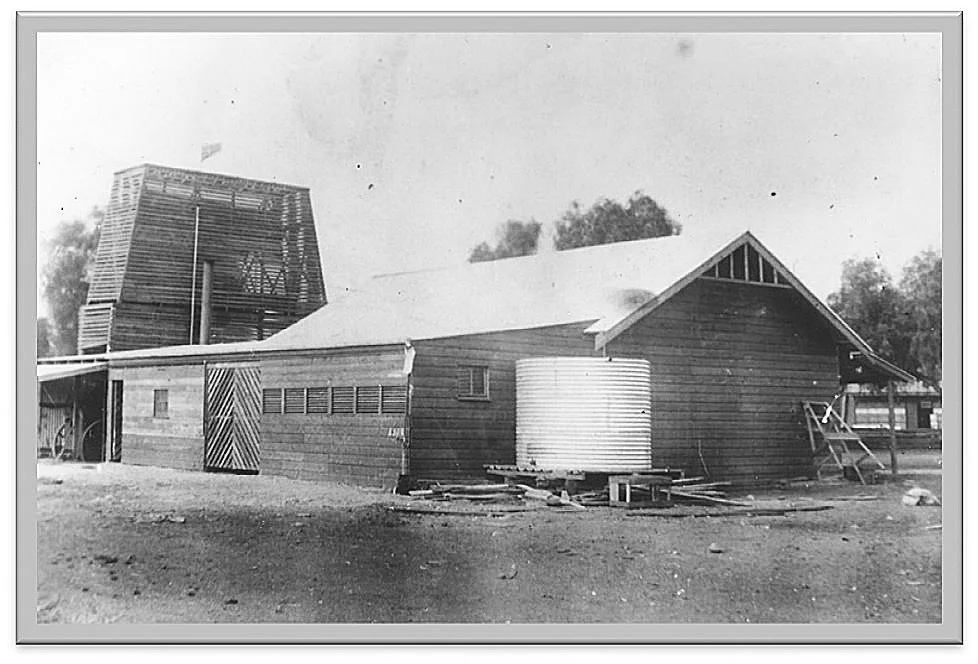
Wellington Freezing Works were located on the corner of Simpson and New Streets which was Michael White & Company’s storage yard until the sale to Wellington Soldiers Memorial Club for NDIS unit construction. However, Council purchased the site behind Wellington TAFE for the REACT Centre.
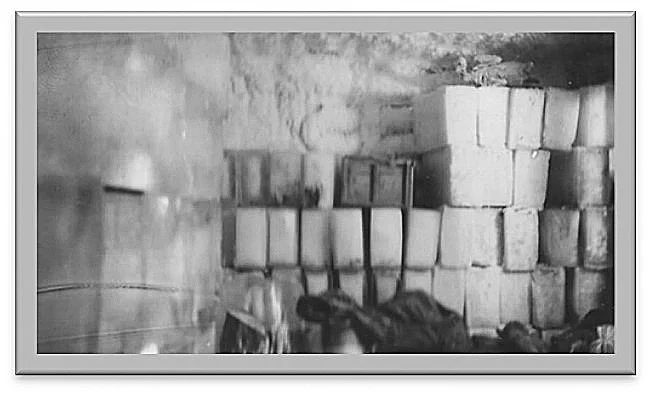
Large blocks of ice were stored inside the works in Simpson Street.
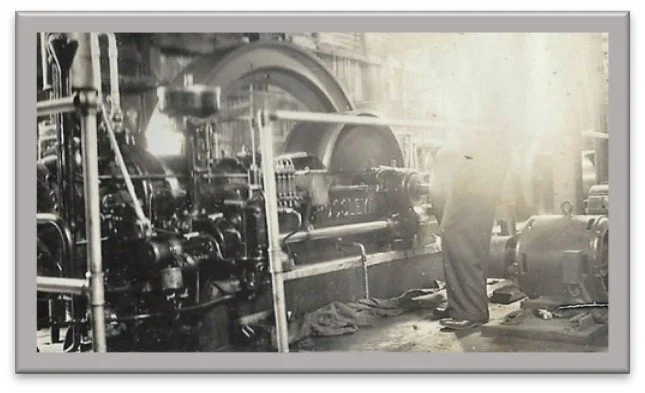
The engine powering the freezing works.
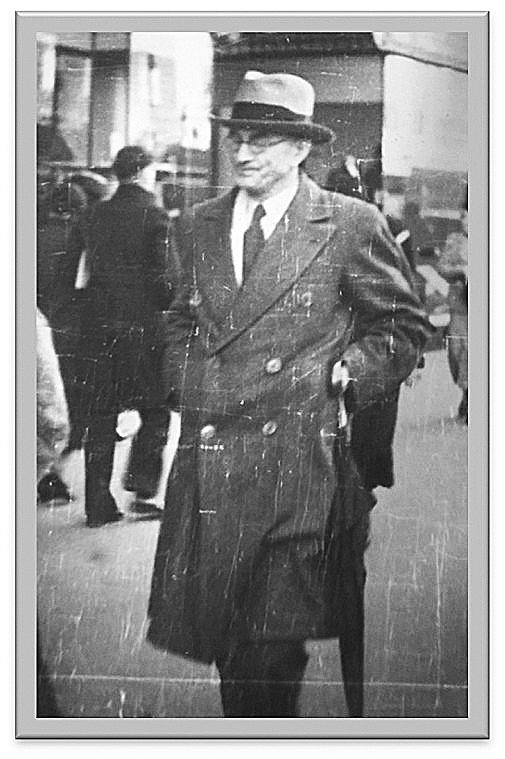
Anthony Devine.
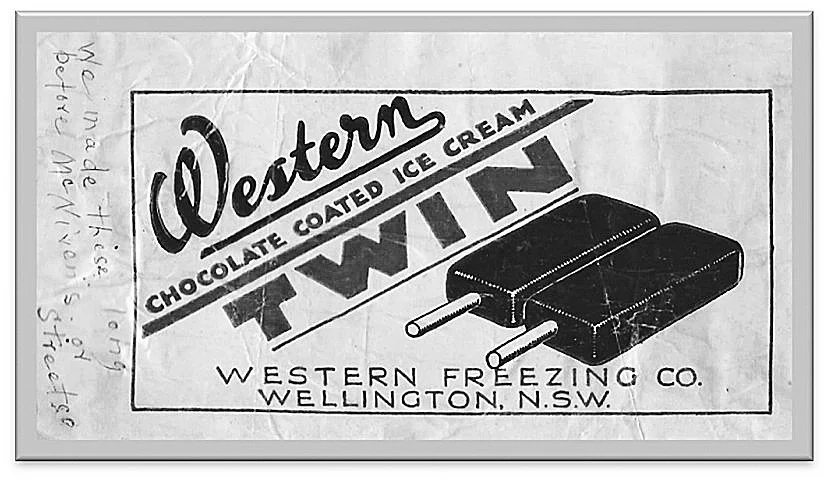
Marie Hoffman, whose parents had a grocery shop on the corner of Bank and Arthur Streets, said the chocolate coated ‘Twin’ ice cream made by the freezing works was equal to, and even better that the national Streets and McNiven brands.
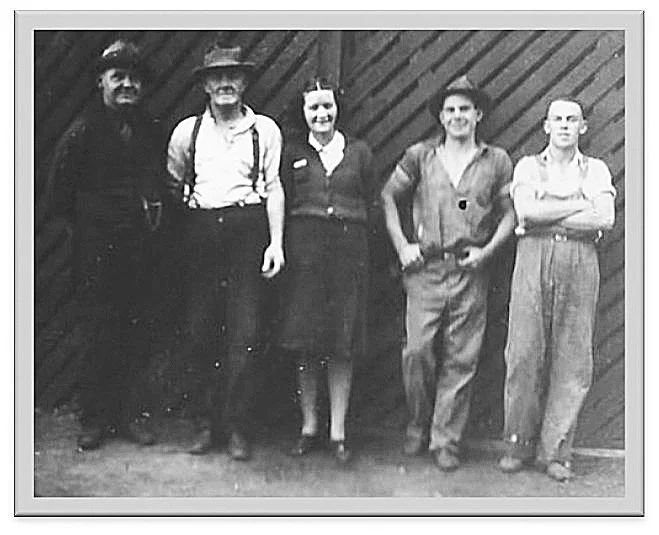
Staff at the Freezing Works.
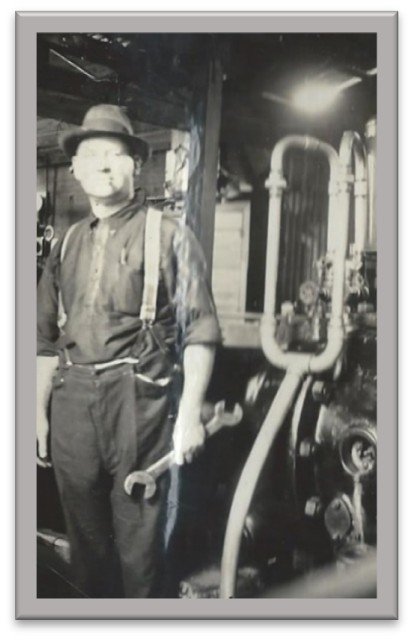
Ted Dubb, the engineer.
Marie Hoffman looks back into local history.
A KEY piece of the region’s renewable energy future has been secured with Council purchasing 93 Simpson Street, Wellington as the new home for the Renewable Energy Awareness and Career Training (REACT) Centre.
The acquisition unlocks the next phase of the project, allowing Council to shift REACT from concept to concrete plans.
The project received an $11.24 million EnergyCo Community and Employment Benefit Program grant for legacy, Council-led projects.
The grant is part of the NSW Government’s initial $128 million investment to share benefits with communities during the delivery of the Central-West Orana Renewable Energy Zone.
With the land now secured, Council will move into detailed design and delivery, setting the course for a landmark regional facility located behind Wellington TAFE expected to open by 2028. When completed the REACT Centre is expected to provide a powerful advantage for residents of the region when it supports employment, attracts industry and prepares residents for future jobs.
Anthony Ignatius Devine – Western Freezing Works
“Few country businessmen have had the courage and enterprise to launch out into a field of commercial endeavour in direct competition with powerful manufacturing concerns which over many years of trading had gained a virtual monopoly of the market.” Wellington Times 1940.
OCTOBER 1914, Anthony Devine entered into partnership with Vince Broderick in an export business handling rabbits and poultry with headquarters at 25 Harbour Street, Sydney.
The business expanded and soon Anthony supervised the construction of the partnership’s freezing works in Wellington at the corner of New Street and Simpson Street.
Anthony Devine was born at Little River, Victoria on September 9 1880.
He received his early education at the Little River Catholic School and later at the St Patrick’s College, Ballarat.
In 1895 he started work at the age of 14 in an ironmongery store in Geelong and subsequently worked in Melbourne before joining the Massey Harris organisation in 1899, building reapers and binders.
Within two years, he was responsible for the distribution of Massey Harris spare parts to country areas. In 1903 he managed the company’s spare parts for a large part of Tasmania.
Anthony returned to Victoria in 1904 and became the Massey Harris representative for the Wimmera district.
He resigned from Massey Harris in October 1905 and took the lease of new land on the Werribee Park Estate at Werribee, Victoria.
He farmed his estate for some years before travelling overland by bullock and horse team in 1910 to take up land at Berrigan, NSW.
After a succession of droughts, he sold the Berrigan property in February 1914.
For a period, he worked in Melbourne at Tarrant’s Motors, helping to build T-model Ford cars.
October 1914, Anthony Devine entered into partnership with Michael Vincent (Vince) Broderick in an export business handling rabbits and poultry with headquarters at 25 Harbour Street, Sydney.
The business expanded quickly. Because of good breeding conditions in the west for rabbits, it was decided to construct a freezing works at Wellington.
Anthony supervised the construction at Wellington. His versatile background gave him the skills and knowledge to establish the Western Freezing Works in Wellington and later Bowenfels near Lithgow.
Local contractors, Messrs Hodge Bros., were the builders of the Wellington factory. All the timber used in the works was local.
The concreting for the boiler foundation was carried out by Mr. W. Jennings.
The Freezing Works was opened for business in February 1915. The structure consisted of three freezing rooms 24 x 12 feet for the cool storage of rabbits and poultry.
It was anticipated that 20,000 pairs of rabbits a week would be processed.
The rooms were well insulated, the walls and floor being a foot thick with a ceiling of 18 inches, covered with five thicknesses of timber and two coatings of rubberoid.
The ice was provided by a ten-ton Linde compressor and because of the complete insultation, the temperature was always kept at zero.
The motive power was supplied by a 20 hp Robey engine, securely bedded in concrete and was under the care of Mr. Arthur Hamilton who had had 20 years’ experience as a refrigeration engineer.
Another staff member was Mr. J. Murphy as grader. He had 15 years’ experience in the rabbit industry.
The Freezing works relied on steam power until the 1930s when a 95hp Crossly Diesel was installed.
Anthony’s grandson, John Devine recalls, ‘The huge oil engine was a 1 cylinder and was started by moving a 12’ fly wheel and a compressor was used to start the engine.
In later years a 200 hp electric engine was fitted’.
John also said that local stores in the area (because of lack of refrigeration) would drop off perishables at close of business and collect them the next morning.
In October 1916 the Western Freezing Co., purchased a block of land near the Bowenfels railway station from Mr. J.L. Brown.
The building of the rabbit freezing works by a Sydney contractor commenced in October and was chilling rabbits by the end of the year.
The Wellington Freezing Works conducted a large business in rabbits and poultry (both chickens and turkeys) which after proper freezing were consigned to Sydney and overseas markets.
The highest price was paid for these commodities and the firm was known for its fair and just methods of trading.
From 1923 the Wellington Freezing Works manufactured ice cream made from pure milk and cream supplied by Wellington dairymen.
The Wellington delicacy became so popular that it was stocked and sold, not only in Wellington, but in practically every main town in the west.
It is not an idle boast on the part of Wellington to say that its locally manufactured ice-cream was equal to anything in this part of the country.
For 27 years, until 1953, the works made and supplied the ice cream.
Ice-cream was not the sole output of this local industry. Ice was also manufactured in large quantities in conjunction with the cold storage section.
Ice could be manufactured in a dozen different grades but in Wellington it was agreed that the ice turned out by Western Freezing Works was of the enduring type which made it economical for all types of household use.
The partnership had freezing works at Wellington and Bowenfels (near Lithgow) and Mr Devine supervised these enterprises from Wellington.
The partnership between Anthony Devine and Vince Broderick ended in May 1924 when Anthony Devine took sole control of the business.
After operating for more than 42 years, the Western Freezing Works in Wellington was closed in May 1957. The building was demolished, and the block sold.